PUTIN’S CHESS GAME

(CNN) A call between US President Joe Biden and Ukrainian President Volodymyr Zelensky on Thursday "did not go well," a senior Ukrainian official told CNN, amid disagreements over the "risk levels" of a Russian attack.
The White House, however, disputed the official's account, warning that anonymous sources were "leaking falsehoods." They did state that Biden warned Zelensky an imminent invasion is a "distinct possibility."
On the call, which the Ukrainian official described as "long and frank," Biden warned his Ukrainian counterpart that a Russian attack may be imminent, saying that an invasion was now virtually certain, once the ground had frozen later in February, according to the official.
Zelensky, however, restated his position that the threat from Russia remains "dangerous but ambiguous," and it is not certain that an attack will take place, the official said.
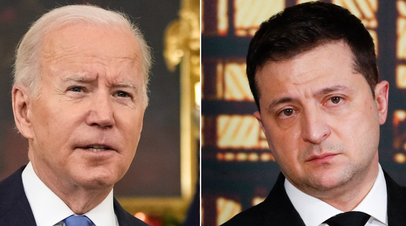
National Security Council spokeswoman Emily Horne disputed the senior Ukrainian official's description of the call. "Anonymous sources are 'leaking' falsehoods," she told CNN. "President Biden said that there is a distinct possibility that the Russians could invade Ukraine in February. He has said this publicly and we have been warning about this for months. Reports of anything more or different than that are completely false."
The frank discussion between the two leaders comes as the US and NATO continue to brace for the prospect of a Russian invasion. Though they have stressed the need for diplomacy, the White House has warned an invasion could be imminent with tens of thousands of Russian troops massed on the Ukrainian border.
The call lasted an hour and 20 minutes Thursday, according to a US national security official, highlighting the extensive issues the two leaders had to discuss amid the Russian troop buildup. The official described the call as "long and serious," but "productive," as Biden and Zelensky discussed Russia's recent aggressions.
Biden told Zelensky that US officials have assessed an invasion could potentially happen in February, but did not say it definitely would, the official said.
DONALD T-RUMP
— NEEDS TO BE SILENCED AND CHARGED AS A TRAITOR —
- LIAR AND COWARD — T-RUMP DID NOTHING WHEN HE HANDED SYRIA and THEN HANDED THE CRIMEA TO PUTIN AND AGIN DID NOTHING — Vladimir Putin said that Russian troops in the Crimean peninsula were aimed “ To ensure proper conditions for the people of Crimea to be able to freely express their will", whilst Ukraine and other nations argue that such intervention is a violation of Ukraine's sovereignty. WHAT DID YOU EXPECT PUTIN TO DO?
- HE SEES THE US AS WEAK AND GETS WHATEVER HE WANTS — If you translated his two hour speech on Tuesday he forecast all that is happening and why, even going back to Stalin, Lenin and Yeltsin. This is his legacy he is writing now, the restoration of the Soviet Union.
- NOW PUTIN WANTS THE UKRAINE — and the scumbags of the GOP blame Biden for the real cowardliness of the make believe Fueher T-RUMP and what he brought upon our core, with his friendship moves, basically he gave the house, make that houses, land, freedom away just like he would do here in America and Biden says no.
- I AGREE WITH MY PROFESSORS. — The majority agree and they believe some Americans are really weak and ignorant of truth in their thinking and judgement. Thus, not capable nor should be allowed to vote if their stupidity level matches T-RUMP which is on a par with a gerbil.
WhiteHouse Says Biden Promised US Would 'Respond Decisively — A White House readout of the call said that Biden "reaffirmed" to Zelensky that the United States would "respond decisively if Russia further invades Ukraine." Biden also said the US will explore "additional macroeconomic support" to help the Ukrainian economy as a result of Russia's military buildup.
"President Biden noted the United States has provided Ukraine with over half a billion dollars in development and humanitarian assistance in the last year, and is exploring additional macroeconomic support to help Ukraine's economy amidst pressure resulting from Russia's military build-up," the White House said in the readout.
A spokesman for Zelensky also disputed the Ukrainian official's characterization of the call. Zelensky tweeted that he and Biden had a long call where they "discussed recent diplomatic efforts on de-escalation and agreed on joint actions for the future." The Ukrainian President said he thanked Biden for the ongoing military assistance and said "possibilities for financial support to Ukraine were also discussed."
The senior Ukrainian official, however, told CNN that Biden said Ukraine would not be offered significantly more military help.
Zelensky urged his American counterpart to "calm down the messaging," warning of the economic impact of panic, according to the official. He also said Ukrainian intelligence sees the threat differently.
The Ukrainian leader pointed to a recent breakthrough in negotiations with Russia in Paris, saying that he hoped a ceasefire agreement with rebels in eastern Ukraine would be maintained. He also said the talks between the US, Russia and NATO still had some distance to run before diplomatic efforts had been exhausted, the official said.
Earlier in the day, another source from the US side said there is a recognition in the White House that Zelensky has "multiple audiences" and is trying to balance them. "On the one hand, he wants assistance, but he has to assure his people he has the situation under control. That's a tricky balance," the source said.
PENTAGON SAYS RUSSIAN BUILDUP IS CONTINUING — Russia's military buildup along the Ukrainian border has increased over the past 24 hours, the Pentagon said Thursday, while the US awaits Russian President Vladimir Putin's response to its written proposals submitted to Moscow on Wednesday.
"We continue to see, including in the last 24 hours, more accumulation of credible combat forces arrayed by the Russians in, again, the western part of their country and in Belarus," Pentagon press secretary John Kirby said at a press briefing.
Kirby described the buildup as "not dramatic" but "also not sclerotic."
The US is still holding out hope that diplomatic efforts with Russia can lead to a de-escalation. On Wednesday, the US and NATO submitted separate written responses to Russia's publicly aired concerns, an overture that Moscow had requested. While the US did not disclose what was contained in the document, Secretary of State Antony Blinken told reporters Wednesday it did not give any ground NATO's "open-door policy," leaving the US at odds with Russia's central demand that NATO commit to never admitting Ukraine.
Putin has read the responses from the US and NATO, a Kremlin spokesman said Thursday, but Russian Foreign Minister Sergey Lavrov said they failed to address Russia's primary concerns.
"There is no positive reaction on the main issue in this document," Lavrov told reporters in Moscow. "The main issue is our clear position on the inadmissibility of further expansion of NATO to the East and the deployment of strike weapons that could threaten the territory of the Russian Federation."
Earlier this week, as many as 8,500 US troops were placed on heightened alert to prepare to deploy to Eastern Europe. Those troops include elements of the 82nd airborne division at Fort Bragg, North Carolina, as well as elements of the 18th Airborne Corps, the 101st Airborne Division and the Fourth Infantry Division, Kirby said Thursday.
These units include "medical support, aviation support, logistical support" and "combat formation," the Pentagon spokesman said.
Inside Europe, Kirby said top general of US European Command, Gen. Tod Wolters, was "taking prudent steps" to make sure that US troops based in Europe could be moved within the continent if needed.
The Pentagon was "not ruling out" the possibility that forces in Europe could be moved to "help bolster capabilities of NATO allies," Kirby said.
CNN reported Wednesday that the US and a handful of allies are in discussions to deploy thousands more troops to Eastern European NATO countries before any potential Russian invasion of Ukraine as a show of support in the face of Moscow's ongoing aggression, according to three US officials familiar with the discussions.
Among the countries considering accepting the deployments are Romania, Bulgaria, and Hungary. The deployments would number approximately 1,000 personnel to each country and would be similar to the forward battle groups currently stationed in the Baltic States and Poland.
"We take our NATO commitment seriously. And we're going to be consulting with allies as we have been certainly in coming days. And if there's ways in which we can help bolster their capabilities to help their defensive postures, we're going to take a serious look at that," Kirby said.
CNN's Kaitlan Collins, Jennifer Hansler, Natasha Bertrand, Ellie Kaufman and Kylie Atwood contributed reporting.
(CNN) President Joe Biden said Friday that he will move US troops to NATO allies in Eastern Europe in the "near term," marking a new phase in the US response to Russia's escalation on the Ukrainian border, which US officials fear could soon lead to an invasion.

"I will be moving US troops to Eastern Europe in NATO countries in the near term," Biden told reporters when asked about a timeline for moving the troops, adding that he did not have any updates on the situation in Ukraine.
As many as 8,500 US troops had been placed on heightened alert earlier this week to prepare to deploy to Eastern Europe -- including units with "medical support, aviation support, logistical support" and "combat formation," according to a Pentagon spokesman.
Biden's comments come hours after the top US military general, Chairman of the Joint Chiefs of Staff Gen. Mark Milley, warned a Russian invasion of Ukraine would be "horrific" for the country and would result in "significant" casualties as he urged Russian President Vladimir Putin to choose a diplomatic path instead.
"Given the type of forces that are arrayed ... if that was unleashed on Ukraine, it would be significant, very significant, and it would result in a significant amount of casualties," Milley said at a Pentagon press briefing Friday. "You can imagine what that might look like in dense urban areas, along roads, and so on and so forth. It would be horrific. It would be terrible. And it's not necessary. And we think a diplomatic outcome is the way to go here."
Milley, who along with Defense Secretary Lloyd Austin briefed reporters Friday on the US military's preparations, spoke of Ukraine's geography, noting that when its "high water table" freezes, "it makes it for optimal conditions for cross-country tract and wheeled vehicle maneuver."
"There are many people and highly dense population centers throughout Ukraine. And if war were to break out on a scale and scope that is possible, the civilian population will suffer immensely," he said.
Milley's remarks stand in contrast to the message coming from Ukrainian President Volodymyr Zelensky. Zelensky spoke to Biden by phone Thursday, where the two leaders disagreed on the urgency of the threat Russia poses, and Zelensky reiterated his view speaking in Ukraine Fridaythat the rhetoric risks causing panic and destabilizing his country's economy.
"They are saying tomorrow is the war. This means panic," Zelensky told reporters.
But Milley said that he thinks Russia's actions "feel different" than previous escalations. "This is larger in scale and scope in the massing of forces than anything we've seen in recent memory, and I think you'd have to go back quite a while into the Cold War days to see something of this magnitude," he said.
'IT WILL NOT BE COST FREE’ — MILLEY noted that the combat capabilities of the Ukrainian military have improved since 2014, "but they need additional help to defend themselves especially from an invasion force the size that Russia is currently massing."
Still, Milley said that "if Russia chooses to invade Ukraine, it will not be cost free, in terms of casualties, or other significant effects.” Milley said the US has no intent of putting "offensive forces" anywhere to "attack Russia," adding that the current situation between Russia and Ukraine "is entirely engineered by Russia and President Putin."
Austin said that no decision had been made yet to deploy the US forces on heightened alert to Eastern Europe. He said the main goal of troops, which would primarily be deployed to support NATO's quick response force, was about "reassuring our allies."
Ukraine's President Zelensky urges world leaders to tone down rhetoric on threat of war with Russia
"This is about our allies trusting us. And so, that's really what we're focused on," Austin said. "And we, you know, Mr. Putin, at some point, will reveal what he's thinking. But again, I'm not sure that he's made the final decisions on what he's going to do yet."
Russia has continued to claim it is not planning to attack Ukraine. In an interview with Russian journalists Friday, Russian Foreign Minister Sergey Lavrov said, "if it is up to the Russian Federation, there will be no war. We don't want a war."
While the Biden administration "welcomed" that message, a senior administration official said, it had to be backed up with action.
"We need to see Russia pulling some of the troops that they have deployed away from the Ukrainian border and taking other de-escalatory steps," the administration official said on a call Friday.
UN SECURITY COUNCIL WILL MEET ON UKRAINE MONDAY — The United States requested a United Nations Security Council meeting Monday on Ukraine, which it sees as an opportunity for Russia "to explain its extraordinary military buildup on Ukraine's borders and its other threats and destabilizing acts," the senior administration official said Friday.
"While I do think there will be some deflection and perhaps some disinformation -- we know that playbook -- but there's also a clear opportunity for Russia to tell the Security Council whether they see a path for diplomacy or are interested in pursuing conflict," the official said. "And I also think this will be an opportunity -- and will be very important -- for Russia to hear the position that other council members take on these fundamental principles of the international order."
NEW DISCORD BETWEEN UKRAINE AND US PLAYS RIGHT INTO PUTIN'S HANDS — "We hope and expect that our council colleagues will express their desire to pursue a path of diplomacy rather than the path of war," the official said.
The official said the US felt "it would be a dereliction of the Security Council's duties to take a wait and see approach," and said US Ambassador to the UN Linda Thomas-Greenfield will "present the facts of the case and clearly articulate what's at stake for European and global peace and security.” There is no statement or Council action expected from the meeting.
A second official said the US Mission to the UN has been actively engaged with others in New York, including Ukraine, other European nations including Germany, China and Russia.
"We've been in very active dialogue with China, obviously about range of issues, but also, in particular, this situation, Russia and Ukraine," they said. "We've been an active diplomatic conversation with the Chinese mission in New York about this meeting and the issue as it comes to the Security Council as well."