Debris And Pollution — Education, Stewardship, And Community
PROGRAM LINK:
https://marinedebris.noaa.gov/?utm_medium=email&utm_source=GovDelivery

NOAA Planet Stewards Program Links:
- NOAA Planet Stewards Website
- NOAA Planet Stewards Upcoming Events
- NOAA Planet Stewards Webinar Archives
- NOAA Planet Stewards Educational Resources
- Sign up receive NOAA Planet Stewards The Watch e-newsletter
🐟 FTC Will Make Changes In South West Florida Catch-And-Release Area —
The Florida Fish and Wildlife Conservation Commission (FWC) will make changes to snook, redfish and spotted seatrout management in the area of southwest Florida where they are currently catch-and-release only. As a reminder, snook, redfish and spotted sea trout were temporarily made catch-and-release only in this area after these fisheries were impacted by a 2017-2019 severe red tide. You are responsible for knowing these changes, guaranteed the FTC officers know the current rules. https://myfwc.com/research/
HOW TO HANDLE THE BIG ONE
Keep large fish in the water to reduce stress or injury to the fish.
- Use tackle that is large enough to bring the species you are targeting in quickly, reducing the chance of exhaustion.
- Always revive fish showing signs of exhaustion by allowing a consistent flow of water through the mouth and over the gills. Use a “figure eight motion” if you are fishing from a stationary location.
 Do not gaff a fish unless you intend to harvest it.
 - Keep fingers out of the eyes and gills.
- Use a descending device or venting tool on fish with signs of barotrauma (bloated belly, stomach projecting from the mouth, protruding intestines, bulging eyes).
If you must remove fish from the water:
- Get them back in the water as soon as possible.
- Always hold them horizontally and support their weight with two hands.
- Use wet hands when handling, never a towel or other cloth that can remove their protective slime.
- Do not drag them over rocks, the gunnel of a boat, the side of a dock or pier, or any other rough surface.
Fishing from bridges or piers:
- Only bring fish onto the pier or bridge if you intend to harvest.
- Only target large fish from bridges or piers if you have specialized gear (pier nets or slings) to support their full body, bringing up large fish without proper gear or allowing them to freefall large distances can cause injury and increase mortality.
- If you cannot properly lift the fish, cut the line as close to the fish as possible before releasing it back into the water. And this may mean walking this fish to the shore if fishing from a pier.)

Other tips:
- Correctly using a de-hooking tool can help you quickly and easily remove hooks.
- Use single circle hooks that are non-stainless steel, non-offset and barbless.
- Do not fish when large predatory fish or sharks are in the area. If they show up, move to another fishing location.
- Encourage other anglers to adopt these practices too. Learn more at MyFWC.com/FishHandling.
- So next time you’re out on the water and catch a bull red or any other big fish for your next great fish tale, remember that landing is only half the battle and a successful release ensures more monsters for generations to come.
FWC Released Shoal Bass Into Chipolariver — Reaches Milestone With Release Of Genetically Pure Hatchery-Raised Shoal Bass
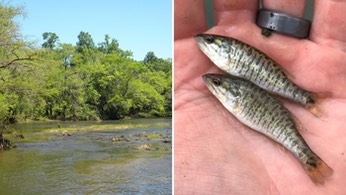
Freshwater fisheries researchers and managers with the Florida Fish and Wildlife Conservation Commission (FWC) successfully released 3,300 hatchery-raised shoal bass fingerlings (young fish) into the Chipola River in May.
In 2018, Hurricane Michael depleted more than 90% of the shoal bass population in the Chipola River. Currently, harvest and possession of shoal bass in the Chipola River and its tributaries remains prohibited.
“This project embodies the necessity for strategic long-term thinking in conservation and the vital role it plays, not only in word, but also in being able to implement these actions,” said Chris Paxton, Regional Fisheries Administrator for Florida’s northwest region. “Thankfully we had already been working on how to spawn these fish in case ‘something happens one day’ to this isolated population. Well, it happened in the form of a Category 5 hurricane.”
Shoal bass are one of four of Florida’s native black bass species, and this effort marks the first time genetically pure shoal bass have been successfully raised in an FWC fish hatchery. Shoal bass are also a Florida Species of Greatest Conservation Need, which refers to native animals whose populations are of concern and are at risk or declining.
“Shoal bass have very specific habitat needs and it is a major milestone to successfully spawn and grow these fish to a size suitable for stocking,” said Bob DeMauro, Hatchery Manager at FWC’s Blackwater Fisheries Research and Development Center. “It is an incredible success to raise these riverine fish in a still-water hatchery pond when they are used to flowing water and limestone shoals in their natural habitat.”
Help Sea Turtles Survive: Fwc Offers Tips On Helping Hatchlings — Sea turtle hatchlings are beginning to appear on beaches throughout the Sunshine State, and the Florida Fish and Wildlife Conservation Commission (FWC) is asking the public to help ensure these tiny turtles reach the ocean by following a few simple guidelines.
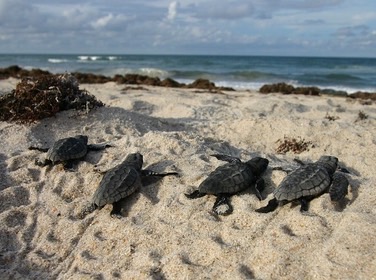
During sea turtle nesting season (March 1 – Oct. 31), it is important to keep your distance from these protected marine reptiles and their nests. You should allow hatchlings to crawl toward the ocean on their own. Any interference or disturbance, including getting too close, can cause hatchlings to become confused and lose their way.
Bright lights, whether from buildings, phones or cameras, can also cause them to become disoriented, leading the hatchlings to stray away from the waves. If they are unable to reach the ocean quickly, they can become vulnerable to dehydration, exhaustion and predators.
“Interfering with a sea turtle hatchling’s trek to the ocean can have fatal consequences,” said FWC sea turtle biologist Robbin Trindell. “It’s very important to leave them undisturbed. By keeping beaches dark and giving sea turtles space, we can make sure that our children and grandchildren can also enjoy watching them make this amazing journey.”
There are many ways you can make a difference for Florida’s sea turtles:
- Keep beaches dark for sea turtles – After sundown, turn off any lights not necessary for human safety. Use long wavelength amber LED lamps for lights that must stay lit and shield lights, so they are not visible from the beach. Remember to close shades or curtains.
- No flash photos – On the beach at night, don’t take flash photos or use bright cellphones or flashlights. This can cause turtles to become disoriented and crawl away from the ocean, putting them at risk.
- Remember, sea turtles are protected by law – Stay back and give sea turtles space if you see one on the beach at night. Don’t touch a nesting turtle because it may leave the beach without nesting if disturbed. Remember, it is illegal to harm or disturb nesting sea turtles, their nests, eggs or hatchlings.
- Clear the way at the end of the day – Beach furniture, canopies, boats and toys left behind on the sand can become obstacles that block nesting and hatchling turtles. Fill in any holes dug in the sand. Holes can trap turtles, and can also pose a safety risk for other beachgoers.
- Before taking any action, report sea turtles that are sick, injured, dead, entangled or otherwise in danger to the FWC’s Wildlife Alert Hotline: 1-888-404-3922 or text Tip@MyFWC.com.
FWC Announces New Way To Report Gopher Tortoise Sightings — The Florida Fish and Wildlife Conservation Commission (FWC) is launching a new interactive web application designed to provide biologists with thorough and reliable data, and promote science-based gopher tortoise conservation efforts. The new system will replace the Florida Gopher Tortoise smartphone app, which will be decommissioned Sept. 8.
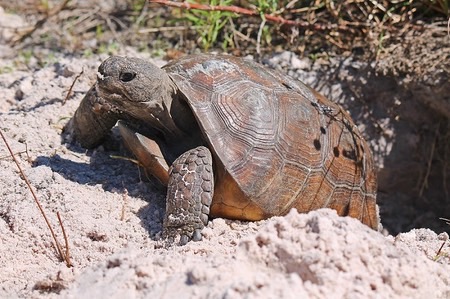
The new web application is user-friendly and is designed to function on any device. To report a tortoise sighting or notify the FWC of a sick, injured or dead tortoise, simply visit MyFWC.com/GopherTortoise and click on the button that reads “Report Gopher Tortoise Sightings.”
There, you can also view an interactive map, which features user-submitted photos and locations of tortoise sightings throughout the state.
“We appreciate the thousands of citizen scientists who have reported gopher tortoise sightings using our original Florida Gopher Tortoise app over the years,” said Michelina Dziadzio, monitoring coordinator for the Wildlife Diversity Conservation Section of the FWC. “These citizen scientists have helped the FWC enhance gopher tortoise conservation and we’re excited for their continued participation using the new web app.”
The gopher tortoise is a protected species that occurs in all 67 Florida counties. The tortoise is known as a keystone species, and its burrows serve as important refuges for 350 native species including threatened species such as the Eastern indigo snake, the burrowing owl and the gopher frog. For more information about gopher tortoises, visit MyFWC.com/GopherTortoise.