MAC AND CHEESE
👹 SPECIFICALLY KRAFTS CON JOB ON FOOD 👎🏼
New Dawn On Old Favorites — NO Velveeta Recipes — I came up with my safer versions of “ Mac and Cheese” because they are fast, pasta healthy, and with more of an adult taste because of the veggies in the first or second one. Besides less or reduced cooking and it's all stove top or microwave. I use this for patients recovering from various illnesses. It brings back childhood too. from here on we’ll just call it MAC+.
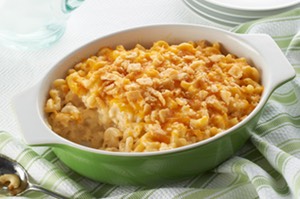
I have never been a fan of the prepared microwavable Kraft Mac and Cheese. It’s garbage. In the same region of food nether-land as, “ Chef BoyADee”. No self respecting Italian eats “ Chef BoyADee” anything period.
Pouring catsup on pasta or on bread and call it Pizza would probably taste better. And frankly, lately they are more watered down in the can. You used to have a fork to get out the contents now they drip out or stick to the bottom.
The goals were cooking ease, speed since MaC is usually an adult panic attack food for the kids after a hard days work. We tell it like it is on this site and you parents know what I am talking about. The first recipe is conventional using Velveeta and kind of a standard. So if you need a quickie, here it is. It is followed by the “ Rest of the story” that parents should read especially knowing whats in Velveeta.
The EASIET Best Stovetop Mac And Cheese — This truly is the easiest stovetop mac and cheese recipe! It only requires one pot (no extra pot to cook the pasta), it’s ready to go in about 20 minutes from start to finish, and it’s perfectly creamy and cheesy and delicious.
Ingredients —
2 tablespoons butter
2 tablespoons flour
3 cups water
4 cups milk
1 pound uncooked pasta (I used Elbow, Penne )
1 teaspoon Kosher salt
1/2 teaspoon garlic powder
1/4 teaspoon ground mustard
4–5 cups (16-20 ounces) freshly-shredded* sharp cheddar cheese (I used sharp white cheddar)
1/2 cup freshly-shredded* Parmesan cheese
Instructions — Melt butter in a large stockpot over medium-high heat. Add flour, and stir until combined. Cook for 1 minute, stirring occasionally. Then pour in 1 cup of the water, and stir (or whisk) until the mixture is completely smooth and begins to thicken. Gradually pour in the remaining water and milk, stirring until evenly combined.
Stir in the pasta, salt, garlic powder, and mustard until combined. Then continue cooking, stirring occasionally, until the mixture just reaches a simmer. (Btw, I recommend grating your cheese while the pasta cooks to save time!) Reduce heat to medium-low to maintain the low simmer. Continue cooking, stirring occasionally, for about 9-10 minutes, or until the pasta is al dente. (Be careful not to overcook the pasta!)
Remove from heat, and stir in the cheeses until melted. Taste, and season with additional salt (and black pepper, if you’d like), as needed.
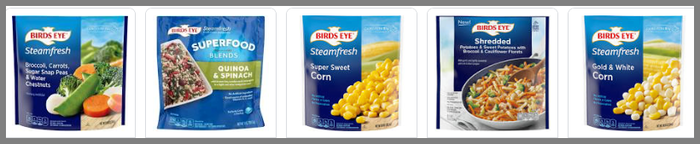
Options To Add Dimension To The Dish — Add package of Birdseye Steamfresh vegetables. - There are six or seven varieties of “ Cooked in the bag” most containing either carrot, broccoli, corn , Italian, Snap peas, zucchini and lots more available for variety. I use a different one each time I make it. Makes a side into a meal and healthier, still one pot.
The Contest Winner — Macaroni & Cheese — Award Winner —
Ingredients
1 lb. dried elbow pasta
1/2 cup unsalted butter
1/2 cup all purpose flour
1 1/2 cups whole milk
2 1/2 cups half and half
4 cups grated medium sharp cheddar cheese divided (measured after grating)
2 cups grated Gruyere cheese divided (measured after grating)
1/2 Tbsp. salt
1/2 tsp. black pepper
1/4 tsp. paprika
Tablespoon Olive oil
Process —
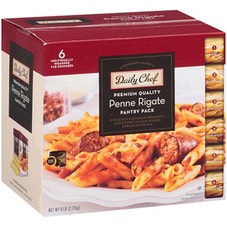
- Preheat oven to 325 degrees F and grease a 3 qt baking dish (9x13"). Set aside.
- Bring a large pot of salted water to a boil. When boiling, add dried pasta and cook 1 minute less than the package directs for al dente. Drain and drizzle with a little bit of olive oil to keep from sticking.
- While water is coming up to a boil, grate cheeses and toss together to mix, then divide into three piles. Approximately 3 cups for the sauce, 1 1/2 cups for the inner layer, and 1 1/2 cups for the topping.
- Melt butter in a large saucepan over MED heat. Sprinkle in flour and whisk to combine. Mixture will look like very wet sand. Cook for approximately 1 minute, whisking often. Slowly pour in about 2 cups or so of the milk/half and half, while whisking constantly, until smooth. Slowly pour in the remaining milk/half and half, while whisking constantly, until combined and smooth.
- Continue to heat over MED heat, whisking very often, until thickened to a very thick consistency. It should almost be the consistency of a semi thinned out condensed soup.
- Remove from the heat and stir in spices and 1 1/2 cups of the cheeses, stirring to melt and combine. Stir in another 1 1/2 cups of cheese, and stir until completely melted and smooth.
- In a large mixing bowl, combine drained pasta with cheese sauce, stirring to combine fully. Pour half of the pasta mixture into the prepared baking dish. Top with 1 1/2 cups of grated cheeses, then top that with the remaining pasta mixture.
- Sprinkle the top with the last 1 1/2 cups of cheese and bake for 15 minutes, until cheesy is bubbly and lightly golden brown.
- BAKE 20 min. or until heated through.
Why Not Velveeta — Old Velveeta Removed From The Market — “Velveeta is a brand name of processed synthetic cheese. Velveeta features a soft, rubbery texture and a distinctive taste that advertisers compare to cheddar cheese, and it is noted for its easy melting. Others compare the taste to American cheese or Cheez Whiz. Velveeta is classified by the United States Food and Drug Administration as pasteurized process cheese spread. Velveeta does not need to be refrigerated until it is opened.”
In 2002, the FDA issued a warning letter to Kraft that Velveeta was being sold with packaging that described it as a “pasteurized process cheese spread", which the FDA claimed was false because the product listed milk protein concentrate (MPC) in its ingredients. Velveeta is now sold in the US as a “ pasteurized prepared cheese product", a term for which the FDA does not maintain a standard of identity, and which therefore may contain milk protein concentrate.
“Velveeta is made in part from whey, a by-product of cheese-making. Whey or milk plasma is the liquid remaining after milk has been curdled and strained; it is a by-product of the manufacture of cheese or casein and has several commercial uses. I will not mention them, as you will gag and possibly throw up. Like glue for shoe soles…
Processed cheese has three technical advantages over unprocessed cheese: extended shelf-life, resistance to separation when cooked, and the ability to reuse scraps, trimmings and runoff from other cheese making processes which is saying we made food from trash”
It was created to make use of broken cheese wheels. So it enlisted the help of Emil Frey, a Swiss immigrant who tinkered with the scraps until discovering he could melt them together and add by products like whey until they melded back together in a velvety consistency.
October 31, 2013 - KRAFTS RECALL — Artificial food dyes In Kraft’s Macaroni and Cheese are under fire as petition calls for their removal. The recall was voluntary. It affects some of its Kraft and Polly-O string cheese. The products were recalled because they may change color and spoil before the expiration date listed on the packaging. The company said Friday that the voluntary recall affected about 735,000 cases that were shipped to customers throughout the US. The recalled cheese was not distributed in Canada.
NOTE: Two mothers are circulating a popular petition calling on Kraft Foods to remove artificial dyes, specifically yellow dyes 5 and 6, from its Macaroni & Cheese products. The additives, the bloggers say, are tasteless and potentially dangerous. I am hearing from insiders the chemicals involved in the process are more dangerous than anyone wants to let on. And the cheese is in question too as to it’s process.
They say the colorings have been associated with hyperactivity, allergies, migraines and, in some cases, cancer. The petition already had 149,806 supporters, as of this writing. Kraft sells at least 14 other Mac & Cheese products made either with natural food colors or without added color.
Velveeta Exposed — In reality, the makers of Velveeta weren't looking for a way to melt cheese down--they were looking for a way to put cheese back together. And, though it's owned by, and most heavily associated with, Kraft now, Velveeta was not one of James L. Kraft's cheese creations.
The Frankenstein behind the cheese creation was one Emil Frey, a Swiss cheesemaker who moved from Switzerland to upstate New York, where he worked in cheese factories in the late 1880s. While working at the Monroe Cheese Factory in Monroe, New York, Frey made a name for himself in cheese history by creating Liederkranz, an American-made version of Limburger, a particularly odoriferous semi-soft cow's milk cheese. Liederkranz was extremely successful, but the Monroe Cheese Company wasn’t so lucky: in 1891, the business was foreclosed upon by a bank and bought by a New York City grocer named Jacob Weisl.
Under Weisl's new leadership, the company opened up a second factory in Covington, Pennsylvania, which produced mostly Swiss cheese. Unfortunately, cheesemaking wasn't--and still isn't--a perfectly precise process, and the factory noticed that many wheels were broken or misshapen, wasting valuable product. Not wanting to let this waste fall by the wayside, the company shipped the broken bits back to Monroe, where Frey was charged with figuring out a way to make something valuable from the scraps.
Frey was tinkering with the recipe for Velveeta at an interesting time in American cheese history. "The whole 20th century, there’s so much technology and rapid change," says Paul Kindstedt, professor and author of Cheese and Culture: A History of Cheese and Its Place in Western Civilization. "Velveeta is a very important part of the story." The Industrial Revolution of a century before had turned the world on its head, and cheese production was no different: small, farm-based cheesemakers of yesteryear had turned into large, industrial cheese operations. Moreover, the cheesemaking industry was crossing into science like never before, with the first processed cheeses coming out of Europe in the early part of the 20th century (from the Swiss tradition of melting cheeses for fondue).
In America, James L. Kraft became perhaps the most recognizable face of processed cheese when he discovered that heated cheese with added emulsifying salts would form into a solid mass when cooled--and would keep much longer than non-processed cheese. Processed cheese was immediately welcomed by American consumers because of its consistent quality and increased stability.
In 1918, Frey figured out how to use similar technology to help recoup some of the factory's waste. He learned that by adding a by-product of cheesemaking called whey, which is the liquid released from curds during the cheesemaking process, to the leftover Swiss bits, he could create a very cohesive end-product. Frey named the product Velveeta, and in 1923, the Velveeta Cheese Company became its own corporation. It was successful for a while as its own company (which was based out of Monroe, NY), but in 1927, it was sold to Kraft Foods.
Kraft wasted no time marketing the cheese product for its nutritional value, arguing the addition of whey (which includes potentially desirable carbohydrates and minerals) made the cheese a kind of dairy wonder-product. The company even paid for a research study at Rutgers University to confirm Velveeta's nutritional benefits. In 1931, the American Medical Association gave Velveeta its stamp of approval, citing that the product had all the necessary nutritional value to build "firm flesh."
Velveeta's popularity increased throughout the '30s, '40s and into the '50s--studies of consumer preference done in the 1930s found that two-thirds of Americans preferred processed cheese to natural cheese. But it wasn't just the product's advertised nutritional advantage that kept consumers interested.
"We as a culture have tended to gravitate toward foods that were—and are—predictable, unchanging and relatively bland," Werlin explains. "Processed cheese fit the bill, and it is also easy to use."
Advertising campaigns from the 1950s touted Velveeta's mild flavor, ease of use and nutritional value. As far as cheese products went, Velveeta was a convienent food that was also mild enough to please most consumers, from "Grandad to two-year-olds" as one 1951 newspaper ad proclaimed.
But for moms who wanted the convenience of Velveeta without the hassle of slicing it from the block (like the above video shows), the 1950s brought an alternative: Kraft DeLuxe Slices, which promised more convenience and none of the dried edges of block cheese. Slowly, Velveeta advertisements moved away from competing with the sliced cheese market, toward the now more recognizable iterations of Velveeta as a perfect melting cheese for dips or pastas.
In 1978, Velveeta Shells and Cheese became the first of Kraft's products to claim a portion of the "shelf-stable market," which describes foods that normally would need refrigeration but processing allows them to remain stable at room temperature. A commercial from the 1990s advertises the shells and cheese, with the help of some soulful crooners, by tapping into Velveeta's seemingly endless supply of wonder: it's not the same-old mashed potatoes or rice--it's something new and exciting.
Still, even with the introduction of Velveeta Shells and Cheese, the product only represented a small amount of Kraft’s overall profit shares (currently, Velveeta is estimated to account for only 5 to 8 percent of the company's overall revenue).
So, in the early 2000s, Kraft decided to enter into a mutually beneficially partnership with ConAgra Foods. If when you think of Velveeta, you think of a cheesy queso chile dip, it's because of this very partnership. Neither Velveeta nor RoTel tomatoes and chiles, a ConAgra brand, represent enough of either company's total profits to earn much of their own share of the marketing budget. But by pairing the two items in advertising campaigns together, Kraft gained two things: advertising for Velveeta that it could afford, and a brand-association with a competitor.
Sidebar — Comment On This Story — I became interested because of a young man whom I know whose previous diet, consisted of lot of MAC as a cornerstone, a whole lot of Mac and Cheese.
A very smart young man of fourteen decided he liked to cook. He also liked football and soccer and a hundred other things at his age. Mac and Cheese is a diversion — suitable for prison systems and schools since its cheap and uses synthetic chemistry in the mix or cheese — we call it cheap food —
A busy house hold with parents working sometimes dresses down dinner a crucial meal of the day. He stepped up to the plate and started making dinner to help out with the chores. Great! So with his help, we’ll try to adulterize some of the kids favorites and make it better for them at the same time so he can help out with his family. Unfortunately his main dish was Mac and Cheese — I took the bull by the horn and creating good substitutes.
ERRATA — From research I did, I found out it is more common for children to fixate on a specific food than I thought. Not because of any necessity, more of a habit, to a child Mac 'n' Cheese is a safe comfort food.
I have met in person and with concerned parents in a conversation on line with child guidance professionals, concerning eating habits, indicated when their children fixated on a certain food, and learned it is not an eating disorder but an acquired habit based on again, the comfort food rule.
( Lazy uninformed parents were fifty percent of the problem)
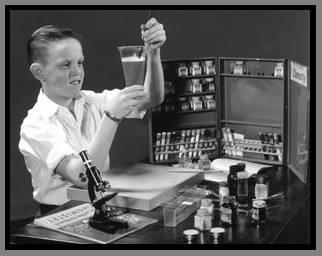
They usually outgrow it and it really does no harm as long as it is not accompanied by other repetitive habits such as dismembering the family pets, and mixing the entire Gilbert Chemistry set and asking dad if he had matches.
- Again, it’s a habit and familiar and again not fatal.
- But yuck, have you ever tasted that instant MAC? In the big pack sold at Sam's — Frankly not fit for human consumption.
- Mothers may love it when they need something quick for the kids after a hard days work and frankly it is the number one food hated and served the most in our prison system.
- My survey came from inmates at Hillsboro's County Jail, several of who preferred the lethal injection as a time saver.
- Quote: “ That sh*t's almost a bad as the Bologna Sandwhiches we get everyday —